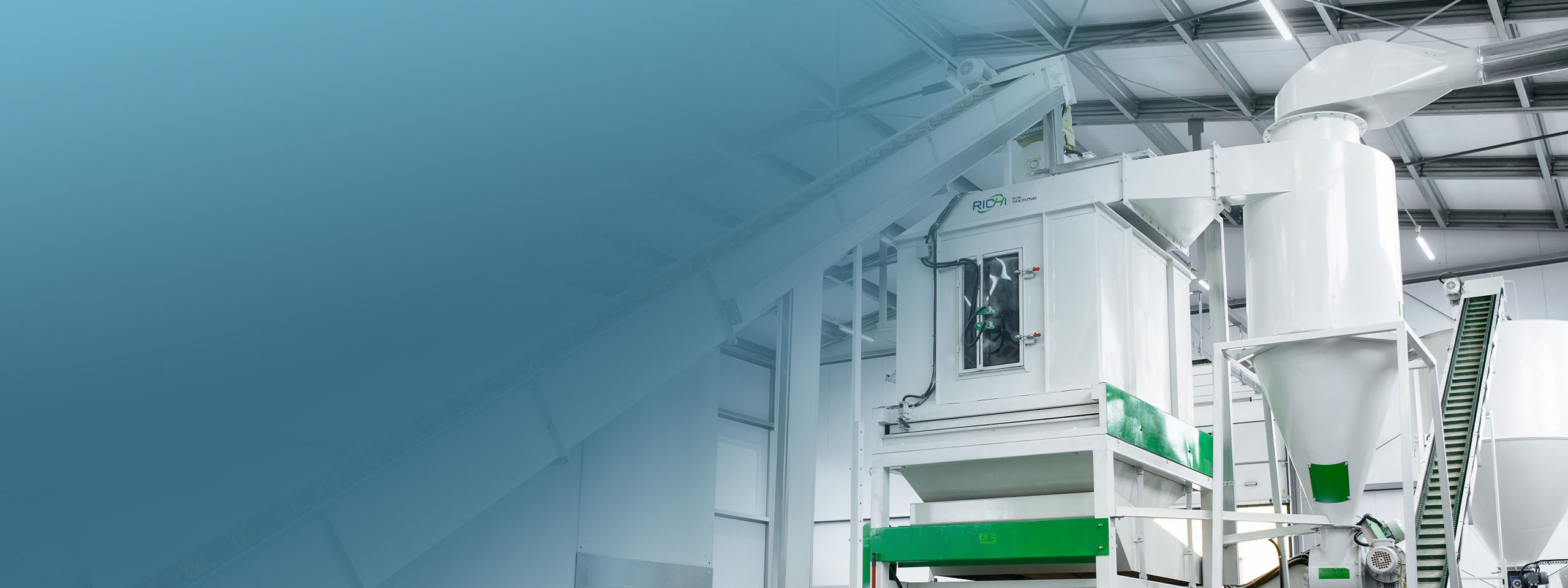
5 T/H FISH FEED PRODUCTION LINE IN RUSSIA
Fully Automated Fish Feed Production Line (Turnkey Project)
Production of sinking and floating fish feed
Feed Specifications:
0.5-8mm
Raw Materials:
Bran, rice bran, soybean meal,silkworm pupa powder, meat and bone meal, salt, plus oils, vitamins, premixes…
Production Capacity:
5 tons/hour
Type:
Fish Feed Production Line
RUSSIAN AQUACULTURE MARKET

In recent years, Russia’s aquaculture industry has developed very fast, from inland freshwater ponds to coastal aquaculture bases. the scale is getting bigger and bigger, and the types of fish raised are getting higher and higher. At the same time, local people’s demand for fresh and high-quality aquatic products is also rising, which gives farmers more motivation to expand production.
However, rapid market growth faces a challenge:
high-quality fish feed always fails to keep up with demand. On the one hand, the supply of quality feed is limited; on the other hand, existing feed often lacks uniform pellets, lacks nutritional stability, and easily deteriorates during storage, which directly affects the breeding efficiency.
Thus, experienced investors increasingly favor automated fish feed production lines.
They hope to build a fully automated line that not only stably produce sinking and floating feed, but also improve production efficiency and control quality. This is also driving Russia’s aquaculture shift from “scale competition” to “quality focus”.
CLIENT PROJECT DETAILS
Located in Russia’s core aquaculture production region, this project provides a fully automated fish feed production solution tailored specifically for the local aquaculture market. The production line we designed for this customer focuses on mass production of fish feed pellets, stably producing both floating and—primarily—sinking feed pellets, perfectly meeting the dominant demand for bottom-feeding fish farming in Russia.
From the outset of investing in a fish feed plant, the client clearly stated his desire–to find a manufacturer with a deep understanding of aquaculture feed equipment. After all, for him, is not only a large investment, but also a “turnkey” project that needs to be entrusted all the time. After comparing multiple suppliers’ websites and reviewing previous aquaculture feed production line cases, the client recognized the advantages of our equipment in sinking feed formation stability and production capacity adaptability, and initiated communication.
During the communication, the customer repeatedly stressed the core requirement that “sinking feed must withstand soaking without disintegrating or losing nutrients.” Our team adjusted the formulation parameters and extrusion process based on local Russian raw material characteristics. And we also provided workshop layout and capacity calculation plans.
But as a turnkey project, the client personally brought a team to visit our factory to inspect core equipment workshops and operational lines, carefully verifying the equipment quality, process maturity, and whether the solution met the requirements of “5 t/h production capacity + 0.5-8 mm multi-specification feed.”
Today, this production line has been successfully installed and commissioned in Russia.

Using locally available raw materials like soybean meal and wheat bran, it consistently produces sinking and floating feed with particle sizes ranging from 0.5–8 mm.

Notably, the sinking feed achieves a formation rate exceeding 98% and retains integrity after 2 hours of soaking—fully meeting local farmers’ demands for high-quality feed. This has helped the client rapidly enter the Russian aquatic feed market.

CUSTOM-TAILORED SOLUTION
When the customer first discussed production line design with us, our engineers didn’t start by introducing the equipment specs. Instead, they asked, “What are your factory’s site dimensions, target capacity, and what production pain points you’re most looking to address?”
And so, through repeated discussions, the solution gradually takes shape.

How to optimize the raw material receiving area to cut back-and-forth transportation costs?
Which power rating for the crushing system balances uniform pellet size with energy efficiency?
How should the die in the extrusion system be adjusted to produce pellets with the perfect density and stable buoyancy?
Should fully automatic packaging be adopted? If so, how much labor could be saved and how much efficiency could be improved?
The final fish feed production line primarily includes the following parts:
Crushing System
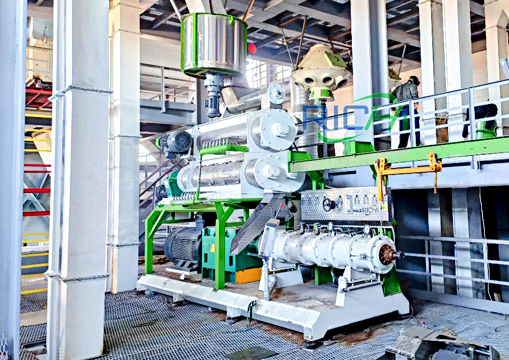
After cleaning and removing impurities, the raw materials enter the crushing stage. Fish feed production typically involves two crushing stages. The first crushing is carried out with a hammer mill, and the second crushing is carried out with an ultrafine grinder. The fineness of the crushed material can meet the requirements of raw materials for fish feed production.
01
Mixing System
According to the requirements of feed formula, the crushed materials are mixed. The entire mixing process includes main material mixing, premix blending and adding grease blending. After mixing, the raw materials are formed into a mass ready for extrusion.
The main equipment used in this section is feed mixer.
02
Extrusion System
The mixed materials are sent to the granulating hopper through the conveyor belt, and then processed in an extruder for pellet formation. In the extruder, the material undergoestriple treatment–high temperature, high pressure, and high humidity. And once reaching certain maturity, it is extruded into fish feed pellets of the appropriate size and length.
03
Drying System
Pellets fresh from the extruder are wet and soft (with moisture content between 25% and 30%). To prevent crushing, pellets produced by the extruder need to be sent to the dryer for drying immediately, so that the water content of the particles can be reduced to 13%.
04
Spraying System
Use spray equipment to coat feed pellets with oil and other liquids (on their surface and inside). This helps the pellets absorb the oil, providing energy for fish and aquatic animals’ growth, and makes the feed more palatable.
05
Packaging System
The packaging process can be categorized by automation levels (weighing, filling, packing) into three types: manual, semi-automatic, and fully automatic. Based on production requirements, the customer finally chose a fully automatic packaging system.
06
RUSSIAN FISH FEED PRODUCTION LINE CONFIGURATION
For the Russia-based 5t/h fish feed plant project, all equipment on the line was independently developed and manufactured by RICHI Machinery. We offer quality guarantees and lifetime after-sales service.
01
Crushing System

Ultrafine Grinder
02
Mixing System

Paddle Mixer
03
Extrusion System
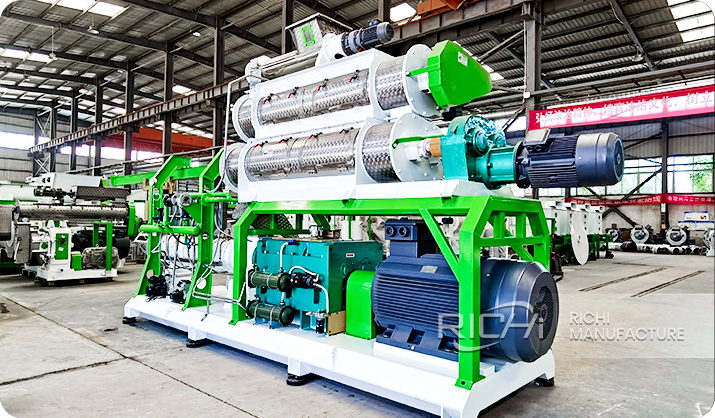
Twin Screw Extruder
04
Drying System

Mesh Belt Dryer
05
Spraying System

Simple Sprayer
06
Packaging System

Ton Bag Scale
Complete fish feed production line delivery process


Machine Production
This is a customized fish feed production line tailored specifically for our client. Key equipment like extruder, crusher, and dryer are manufactured exclusively according to his specific needs. Therefore, once the production line plan was finalized and the contract signed, our factory immediately began arranging production plan for all the necessary equipment.
The production cycle for this fish feed production line takes 120 days (4 months). During this period, we regularly send the client photos and videos of completed equipment, and occasionally share progress on semi-finished machines, to keep the client inform about the entire production process of his purchased equipment.

Equipment Delivery
After all machines are produced within four months, we schedule delivery according to the timeline agreed with the customer in advance.
Delivery is a critical step. We have a complete delivery process. At present, our machines have been exported to more than 140 countries and regions around the world. We guarantee smooth transportation to your project site, wherever it may be.




Installation, Commissioning, and Training
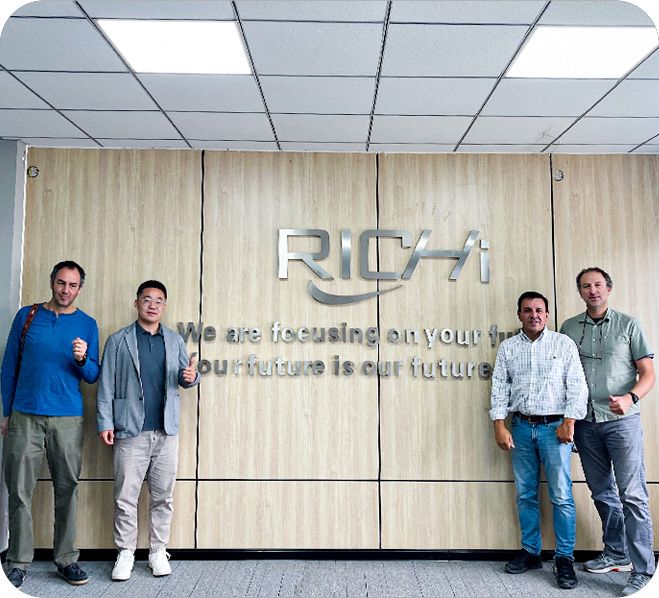
After the equipment arrived at the customer’s project site, we dispatched two professional engineers to provide on-site guidance throughout the installation process. Engineers went with complete installation process specifications, exact 1:1 scaled layout drawings and detailed operation manuals. Thanks to these preparations, the fish feed production line was installed quickly.
After completing the installation, our engineers did not leave immediately but instead conducted a comprehensive commissioning of the entire production line. After confirming that each piece of equipment was connected smoothly and that all parameters met specifications, they assisted the customer in a trial run. They were not at ease until they saw that the production line could stably produce qualified fish feed.
Considering that the customer team is not familiar with the new production line, our engineers also set aside time for focused training. From equipment operation and daily maintenance, to extruder plugging and dryer temperature control, engineers give hands-on guidance. And they also answer questions raised by employees on the spot, helping customers’ teams quickly master production line operation skills.
Customer evaluation and project operation status
While communicating with RICHI’s after-sales service team, the Russian project leader shared high praise for this 5 ton/hour fish feed production line equipment:
“For us, this fish feed plant is not just an ordinary production line; it represents a crucial step in advancing Russia’s aquaculture industry. Therefore, during the construction, we devoted a lot of efforts and attention.
Before, our feed was always imported from Europe. In recent years, the supply chain was unstable, the exchange rate fluctuated, and the farming cost became more and more difficult to control. So we decided to build our own fish feed factory. Choosing RICHI’s equipment can be said to be one of the most correct decisions we have made.
The equipment from RICHI totally exceeded our expectations—it’s been running steadily and reliably this whole time. What really impressed us most were their engineers and technicians. They’re not only solidly professional, but also extremely attentive. When they were doing the installation and commissioning, they nailed every little detail perfectly.

Russian Fish Feed Production Line: Value and Trend
This 5-ton/hour feed production line for sinking/floating fish built in Russia not only meets the ongoing demand for high-quality feed from large-scale aquaculture businesses, but also effectively reduces reliance on imported feed.
As aquaculture and livestock farming grow, building stable, reliable self-owned feed plants has become an industry trend. This ensures controlled supply and predictable costs, providing strong support for long-term business growth.
Types of feed suitable for production in Russia
Cold-water Aquatic Feeds
Russia has abundant water resources (Volga River Basin, Lake Baikal, etc), and fish farming and cold-water fish farming (such as salmon and trout) are relatively common, so aquatic feeds are a key focus.
Floating Fish Feeds
Suitable for freshwater fish such as carp, grass carp, and crucian carp…
Slow-sinking fish feeds
Caters to mid-water column species that neither rise nor sink fully.
Sinking fish feeds
Suitable for bottom-dwelling fish such as catfish, trout, and Atlantic salmon…
Shrimp and Crab Feeds
Though the scale isn’t as big as in Southeast Asia, in some parts of Russia—like the Far Eastern Primorsky Krai (e.g., Kamchatka)—under greenhouse or industrial aquaculture models, there’s a specific demand for high-quality shrimp feed, such as feed for the Far Eastern crayfish.
Cold-Resistant Complete Livestock and Poultry Feed
Russia is a major global grain exporter and is rich in feed raw materials, so livestock and poultry feed has always been the stable foundation of the market.
Pig Feed
Piglet feed, fattening pig feed…
Poultry Feed
Layer hen feed, broiler feed…
Ruminant Feed
Dairy cow feed, beef cattle feed, sheep feed (especially in grassland pastoral areas)
Specialty Feeds
In addition to meeting the bulk demand for livestock and poultry feed and aquatic feed, the Russian market is also increasingly demanding high-value-added, high-tech specialty feeds. Especially for pets and fur animals, high-end feed is becoming a new growth hotspot.
Fur animal feeds
Fox, raccoon dog, mink…
Pet feeds
Extruded dog food, cat food
OUR PROJECTS IN OTHER COUNTRIES
If you are planning a fish feed production line project, choose RICHI as your trusted partner. We will tailor professional equipment solutions and full-process technical assistance to help you launch operations quickly and achieve steady profits.


2.5 Tons/Hour Fish Feed Production Line In Kyrgyzstan
This project successfully overcame the specific requirements of feed extrusion technology in high-altitude regions, providing a cost-effective, localized feed solution for salmon and trout farming. It can make good use of local common corn and soybean meal, as well as local protein ingredients like flaxseed meal. By precisely controlling conditioning temperature and pelleting parameters, it produces feed pellets for sinking fish such as grass carp and rainbow trout.


3-5 tons/hour fish feed factory in Kazakhstan
Designed by RICHI, this 3–5 tons/hour fish feed production line features a twin-screw extruder and multiple grading screens. The biggest highlight is that the production capacity can be flexibly switched according to the market demand—running at full capacity of 5 tons/hour during peak season and dropping to 3 tons/hour during off-season. This not only saves energy but also reduces costs. This line can produce feed for both coldwater and freshwater fish.


1-2 tons/hour fish feed processing plant in Azerbaijan
Tailored to the aquaculture demands along the Caspian Sea, this production line allows for easy switching between sturgeon feed and conventional fish feed. Considering the high sand content of some raw materials in Azerbaijan, we’ve also added an impurity removal device to the line, significantly reducing wear and and enhancing machinery durability.


RICHI Guarantee
RICHI Machinery began as a professional manufacturer in feed pellet machine, and has now developed into a comprehensive solution partner for both feed pellet equipment and complete pellet plant systems. We take great pride in our team’s expertise and skills—from technical sales to process design engineers, every member is committed to supporting our customers. You can confidently choose RICHI to elevate your business.

Custom Design

Extensive Experience

Professional Service Team

Competitive Advantage
WHAT FEED PROCESSING SOLUTIONS CAN WE PROVIDE?
Fish, shrimp, crab, shellfish and other conventional aquaculture species and special aquatic animals

Cats, dogs, hamsters, turtles…

Poultry & Livestock feed production line
Chicken, duck, goose, pigeon, pig…

ruminant feed production line
Cattle, sheep, horses, deer, camels…

Multi-functional feed production line
Flexible switching between multiple categories